Soft 17 Blackjack Strategy: Rules, How to Play Soft 17, and the Dealer Soft 17 Approach
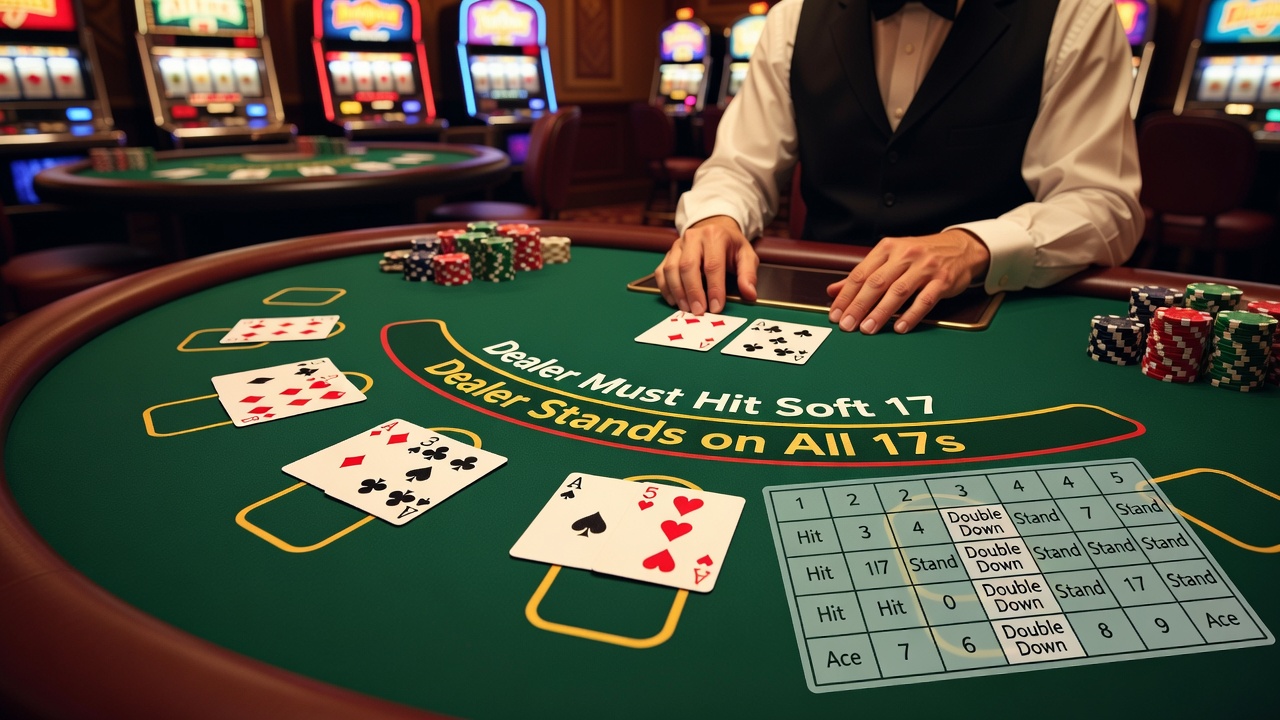
A single rule buried in the fine print of a blackjack table can shift the house edge by nearly a quarter of a percentage point. That rule concerns what the dealer does when holding an ace and a six. It sounds like a minor technicality, yet it separates favorable tables from ones quietly stacked against you.
Most players glance at the felt, see the minimum bet, and sit down without checking a single word printed near the betting circle. That's a mistake, because the phrase "dealer must hit soft 17" or "dealer stands on all 17s" tells you more about your long-term odds than almost any other visible detail. Understanding how to play soft 17 as a player, and recognizing how the dealer's version of the rule changes the math, gives you an edge that costs nothing to acquire. For a concise breakdown of the mechanics involved, this explainer on how to play soft 17 covers the scenario from the player's chair in practical terms.
This piece walks through the full picture: what soft 17 actually means, how the correct plays differ from hard-hand strategy, why casinos choose one dealer rule over the other, and how you should adjust your own decisions depending on which version of the game you're facing.
What Soft 17 Means in Blackjack
Soft 17 refers to any two-or-more-card hand totaling 17 that includes an ace counted as 11. The most common example is an ace paired with a six. Because the ace can drop to a value of 1 without busting the hand, the total is "soft" - it has flexibility that a hard 17, like a ten and a seven, simply doesn't have.
Soft vs. Hard Hands Explained
A hard hand contains no ace, or contains an ace that must count as 1 to avoid busting. A soft hand retains the option to add a card without risk of going over 21, since the ace can absorb the difference. This flexibility is the entire reason soft 17 strategy diverges so sharply from how you'd play a hard 17, where standing is almost always correct.
Why Soft 17 Is Different From Other Soft Totals
Soft 16, soft 17, and soft 18 all behave differently at the table. Soft 17 sits at an awkward point: it's too weak to stand against strong dealer upcards but has enough underlying strength (thanks to the ace) that hitting rarely damages it. This is the core reason soft 17 rules blackjack strategy treats this total as an active hand rather than a passive one.
Common Card Combinations That Create Soft 17
- Ace + 6 (the classic two-card soft 17)
- Ace + 2 + 4
- Ace + 3 + 3
- Ace + Ace + 5 (if a prior ace was already counted as 1)
How to Play Soft 17 as a Player
Basic strategy treats soft 17 as a hand you almost never simply stand on. The ace gives you a built-in insurance policy against busting, which is precisely why the optimal play so often involves hitting or doubling rather than settling for a mediocre total.
When to Hit
Against strong dealer upcards - 9, 10, or ace - you should hit soft 17. Standing here concedes too much value, because a 17 rarely beats a dealer showing strength, while hitting risks nothing worse than turning the ace back into a 1 and continuing with a low hard total.
When to Double Down
Against dealer upcards of 3 through 6, doubling down on soft 17 is the standard move at most tables offering the option. These upcards represent dealer weakness - a higher probability of the dealer busting - so pressing your advantage with a double bet makes mathematical sense. Against a 2, many strategy charts recommend hitting rather than doubling, since the dealer's edge there is milder.
When Standing Might Be Justified
Standing on soft 17 is rarely correct under standard rules, but certain table variants with restrictive doubling rules can nudge the decision toward standing when no better option exists. This is uncommon enough that it shouldn't be treated as a default; it's an exception born from rule restrictions, not a general soft 17 blackjack strategy principle.
Soft 17 Rules Blackjack Tables Use
Casinos post their dealer rules directly on the table layout, and the wording matters enormously. Two phrases dominate: "dealer must hit soft 17" and "dealer must stand on all 17s." These aren't cosmetic differences - they change the game's underlying probability structure.
Reading the Table Rules Correctly
Before placing a single chip, look for the printed rule near the payout information. If it says the dealer hits soft 17, the house retains a slightly larger edge. If it says the dealer stands on all 17s, including soft ones, the game leans marginally more toward the player.
Regional and Casino Variations
Rule sets vary by region and even by pit within the same casino. Higher-limit tables sometimes offer the more player-friendly stand-on-soft-17 rule as a perk, while lower-limit tables more often use the hit-on-soft-17 version to preserve house advantage. Online casinos frequently disclose this rule directly in the game's information panel, making it easy to compare before you commit real money.
How This Rule Interacts With Other Table Conditions
Soft 17 rules don't exist in isolation. A table offering dealer-stands-on-soft-17 alongside poor payout on blackjack (6:5 instead of 3:2) can still be worse overall than a hit-soft-17 table with full 3:2 payouts. Evaluating the complete rule set, not just one line item, is essential to judging a table's real value.
Blackjack Dealer Soft 17 Strategy Explained
Dealers don't choose how to play their hands - house rules dictate every move. Understanding the mechanical logic behind blackjack dealer soft 17 strategy helps explain why the rule exists and how it shifts probabilities across thousands of hands.
Why Casinos Choose Hit-Soft-17 Rules
When a dealer must hit soft 17, they get another opportunity to improve a mediocre hand into a stronger one, or occasionally bust. Across a large enough sample, this consistently increases the house's statistical edge compared to standing pat. It's a small adjustment, but it compounds significantly over the volume of hands a casino processes daily.
Why Some Tables Stand on All 17s
Standing on all 17s, soft or hard, removes the dealer's chance to improve a soft 17 into a stronger total. This version is more forgiving to players and is often used as a competitive differentiator, particularly at higher-stakes tables or in markets where operators compete for skilled players who track table conditions closely.
The Statistical Impact on House Edge
The difference between the two rules typically shifts the house edge by roughly 0.2 percentage points. That may sound trivial, but for high-volume players or those wagering significant sums over long sessions, it represents a meaningful and entirely avoidable cost if better-rule tables are available.
Soft 17 vs Dealer Rules: Adjusting Your Strategy
Your own soft 17 decisions should shift slightly depending on which dealer rule governs the table. This is where soft 17 vs dealer rules considerations move from theoretical to practical.
Strategy Adjustments Under Hit-Soft-17 Tables
When the dealer hits soft 17, certain borderline doubling decisions become slightly more favorable for the player, since the dealer's average final total trends marginally higher, increasing bust probability in specific upcard scenarios. Strategy charts calibrated for hit-soft-17 games reflect these small but real adjustments.
Strategy Adjustments Under Stand-Soft-17 Tables
When dealers stand on all 17s, the dealer's outcomes become slightly more predictable and marginally weaker on average. A handful of doubling and splitting decisions shift by one upcard value compared to hit-soft-17 charts, which is why using a generic strategy card across different rule sets can quietly cost you money.
Practical Tips for Choosing a Table
- Always check the printed dealer rule before sitting down
- Prefer stand-on-all-17s tables when payouts and other conditions are equal
- Match your strategy chart to the specific rule set in play
- Don't assume online and live tables follow identical rules within the same platform
Frequently Asked Questions
Is it ever correct to stand on soft 17 as a player?
Under standard rules, standing on soft 17 is almost never the optimal play, since hitting or doubling carries no bust risk and generally produces better long-term results. It only becomes reasonable under unusual table restrictions that eliminate doubling as an option.
Does the dealer soft 17 rule affect every hand I play?
It affects the dealer's average outcome across all hands, not just those where the dealer actually holds a soft 17. Because the rule changes the dealer's overall bust frequency and final-total distribution, it subtly influences the optimal strategy for many player hands, not only soft 17 situations.
How much does the soft 17 rule really change my odds?
The shift is modest on a hand-by-hand basis, typically around 0.2 percentage points in house edge, but it accumulates meaningfully over extended play. Players wagering consistently over long sessions benefit from seeking out stand-on-all-17s tables when available.
Why do some casinos still use the hit-soft-17 rule if it favors the house?
Casinos balance multiple rule variables to maintain a target house edge while keeping the game attractive. Hit-soft-17 rules let operators offer other player-friendly features, like better payouts or more splitting options, while still preserving overall profitability.
Can I tell which rule a table uses without asking the dealer?
Yes. Casinos are required to display dealer rules directly on the table felt, usually near the payout odds. Look for wording such as "dealer must stand on all 17s" or "dealer hits soft 17" printed in small text along the table's edge.
Does basic strategy change dramatically between the two rule sets?
No, the core soft 17 blackjack strategy remains largely consistent, but a handful of borderline doubling and splitting decisions shift depending on the rule. Using a strategy chart specifically calibrated to the table's dealer rule ensures you're not leaving value on the table.