Buffalo Charge RTP: Return to Player, Odds, and RTP Percentage Explained
A single percentage point separates a slot that pays generously over time from one that quietly drains a bankroll. That distinction matters enormously for anyone considering Buffalo Charge, a game built around the familiar buffalo-themed mechanics that have kept this franchise popular for over a decade. Before spinning a single reel, understanding the Buffalo Charge RTP figure gives players a realistic framework for what to expect across hundreds or thousands of spins.
Return to player isn't marketing language - it's a mathematically derived figure that describes the theoretical percentage of wagered money a slot returns to players over an extended period. For Buffalo Charge, this number shapes everything from session length to the frequency of meaningful wins. Players who want to check the current payout structure and verify the exact figure firsthand can review charge buffalo rtp details directly through official game information before committing real wagers. Knowing this number in advance changes how a player approaches bankroll management and bet sizing.
This piece breaks down what the Buffalo Charge slot RTP percentage actually means, how it compares to industry standards, what the odds look like in practical terms, and how volatility interacts with return figures to shape the actual player experience. The goal is a clear, honest picture - not vague reassurances.
What RTP Means and Why It Matters for Buffalo Charge
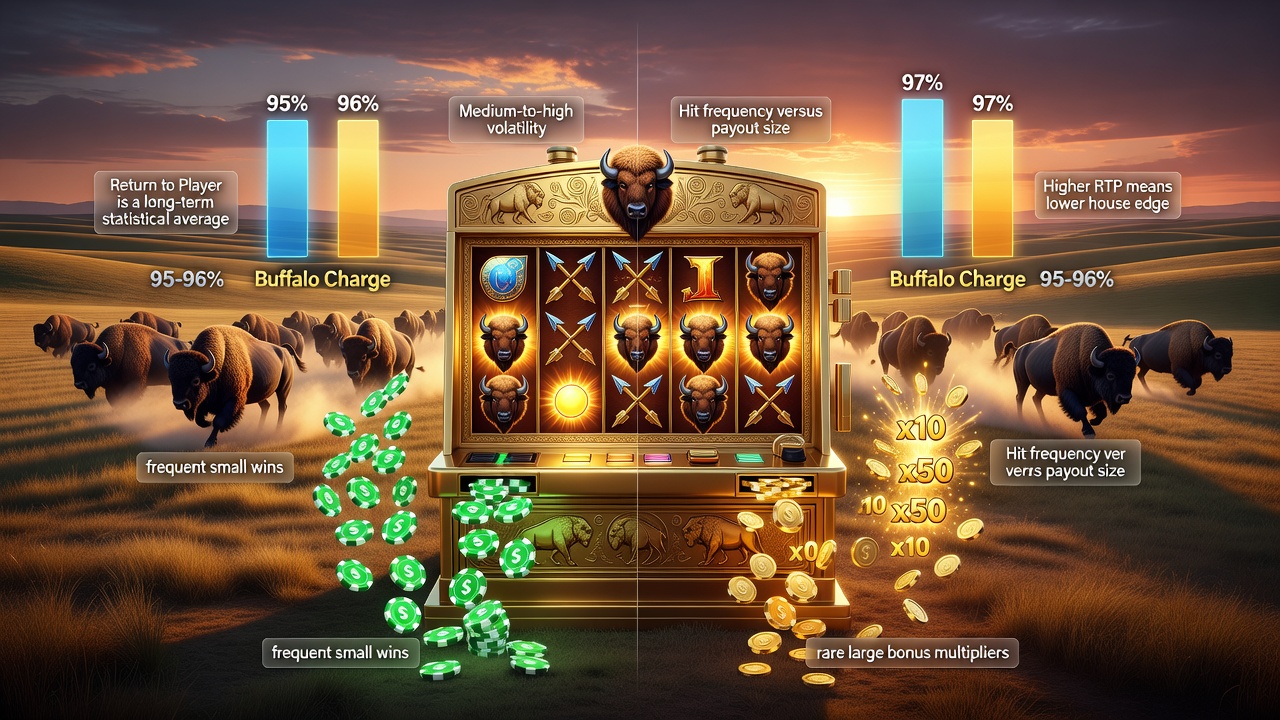
Return to player is a long-term statistical average, not a promise about any single session. When a game advertises a Buffalo Charge RTP of, say, 95%, that figure describes the expected return across millions of simulated spins - not what happens in the next twenty minutes of play. Short sessions frequently deviate wildly from the stated average in both directions.
The Mathematical Basis of RTP
RTP is calculated by game developers during the design phase, using the payout table, symbol frequency, and reel weighting to model outcomes across an enormous number of theoretical spins. Regulatory bodies typically require this figure to be tested and certified before a game reaches the public. The Charge Buffalo RTP return to player calculation follows this same standard methodology, meaning the number displayed in the game's information panel reflects rigorous simulation rather than a rough estimate.
Why Players Should Care About This Number
A higher RTP generally signals a game more favorable to the player over time. The difference between a 94% and a 97% RTP might sound small, but across thousands of spins it compounds into a meaningfully different loss rate. Players comparing multiple slots often use RTP as the first filter before considering theme, volatility, or bonus features.
Common Misunderstandings About RTP
Many players mistakenly believe RTP guarantees a specific outcome within a session. It doesn't. RTP describes the house edge over the long run, and short-term results can swing far above or below that average due to natural variance. Treating RTP as a session-by-session promise leads to frustration and poor bankroll decisions.
- RTP reflects long-term averages, not short-term guarantees
- Higher RTP generally means lower house edge
- Certified RTP figures come from regulatory testing, not developer claims alone
Buffalo Charge Game RTP: The Numbers Explained
Slot games in the buffalo-themed category tend to cluster within a fairly predictable RTP range, typically between 92% and 96%, depending on the studio and the specific version released. Buffalo Charge fits within this general pattern, positioning it competitively against similar wildlife-themed titles.
Where Buffalo Charge Sits Among Similar Slots
Compared to other games in the same visual and thematic family, the Buffalo Charge game RTP tends to land in a middle-to-upper range. This positioning suggests a design philosophy that balances entertainment value with reasonable long-term player returns, rather than optimizing purely for operator margin.
Factors That Influence the Published Percentage
Several design choices affect the final RTP figure: the weighting of high-value symbols, the frequency of bonus round triggers, and the payout multipliers attached to wild symbols. Developers sometimes release multiple RTP configurations of the same game for different markets or operators, which means the exact percentage can vary slightly depending on where and how the game is deployed.
How Operators Might Adjust RTP Variants
It's worth understanding that some slot providers offer operators a choice between several RTP configurations for the same title. This practice is legal and disclosed, but it means the Buffalo Charge slot RTP percentage displayed at one platform could differ slightly from another. Checking the specific game information panel before playing removes any ambiguity.
Buffalo Charge Slot RTP Percentage vs Industry Standards
Context matters when evaluating any single RTP figure. A percentage that looks modest in isolation might actually represent solid value once compared against the broader slot market.
Average RTP Across the Slot Market
Most licensed online slots fall somewhere between 90% and 98% RTP, with the bulk clustering around 95-96%. Games below 92% are increasingly rare among reputable developers, as competitive pressure has pushed average RTP figures upward over the past decade.
How Buffalo Charge Compares
Measured against this broader benchmark, the Buffalo Charge slot RTP percentage sits comfortably within accepted norms, neither a standout outlier on the generous end nor a laggard among stingier titles. This places it in a reasonable middle ground for players seeking dependable, if unspectacular, long-term returns.
Why Comparing Multiple Titles Before Playing Helps
Players who compare RTP figures across several similarly themed slots before choosing where to play give themselves a measurable statistical advantage. A one or two percentage point difference, repeated across dozens of sessions, accumulates into a real difference in expected losses.
Buffalo Charge RTP Odds: Understanding Win Frequency and Payout Size
RTP tells only part of the story. Odds - the actual frequency and size of wins - round out the full picture of what playing Buffalo Charge feels like in practice.
Hit Frequency and What It Reveals
Hit frequency measures how often a spin results in any payout, regardless of size. A game can carry a strong RTP while still delivering infrequent wins, if those wins tend to be large when they occur. Understanding the Buffalo Charge RTP odds requires looking beyond the headline percentage toward this underlying win distribution.
Volatility and Its Relationship to RTP
Volatility describes how wins are distributed - frequent small payouts versus rare large ones. Buffalo-themed slots often lean toward medium-to-high volatility, meaning longer stretches without a win, punctuated by larger payouts including free spin triggers or multiplier bonuses. This volatility profile interacts directly with the stated RTP to shape the real playing experience.
What the Odds Mean for Bankroll Planning
Higher volatility games demand a larger bankroll cushion to survive dry spells before a significant win arrives. Players who understand the odds structure behind Buffalo Charge can size their bets accordingly, avoiding the common mistake of running out of funds just before a bonus round might have triggered.
- Hit frequency shows how often any win occurs
- Volatility shows how wins are sized and distributed
- Combining RTP with volatility gives a fuller risk picture than RTP alone
How to Verify and Use RTP Information When Playing
Knowing where to find accurate RTP data, and how to apply it practically, separates informed players from those relying on guesswork.
Where to Find Official RTP Figures
Legitimate operators and game developers disclose RTP figures within the game's information or help menu, usually accessible through an "i" icon or paytable screen. This is the most reliable source, as it reflects the specific version and configuration actually running on that platform.
Reading Beyond the Headline Number
A single RTP figure rarely tells the whole story. Checking the paytable for symbol values, bonus trigger conditions, and maximum win potential rounds out the picture and helps players form realistic expectations about session outcomes.
Practical Bankroll Strategies Based on RTP and Volatility
Setting a session budget based on the combination of RTP and volatility - rather than RTP alone - produces better outcomes. A lower bet size relative to bankroll allows more spins to unfold, giving the theoretical RTP a better chance to play out as designed.
Frequently Asked Questions
Is the Buffalo Charge RTP the same on every platform?
Not necessarily. Some developers distribute multiple RTP configurations of the same slot to different operators, so the figure can vary slightly by platform. Always check the in-game information panel to confirm the exact percentage active at your chosen site.
Does a higher RTP mean I'll win more often?
Not directly. RTP describes long-term return percentage, while win frequency depends on hit rate and volatility. A high-RTP game can still deliver infrequent wins if those wins tend to be larger when they land.
How many spins does it take for RTP to become accurate?
RTP figures are theoretical averages calculated across millions of simulated spins, far beyond what any individual player experiences. A single session, even a lengthy one, can deviate substantially from the stated percentage due to natural statistical variance.
Is Buffalo Charge considered high or low volatility?
Buffalo-themed slots in this category generally lean toward medium-to-high volatility, meaning payouts can be less frequent but larger when they occur, particularly during bonus rounds or free spin features.
Can casinos change the RTP of a slot after launch?
Operators cannot arbitrarily alter RTP without regulatory approval, since certified figures are tested and locked before public release. Any variation typically comes from developer-provided alternate configurations, not unilateral changes by an individual casino.
Should RTP be the only factor when choosing a slot to play?
No. RTP is a useful starting point, but volatility, maximum win potential, bonus feature design, and personal risk tolerance all shape the actual playing experience and should factor into the decision alongside the raw percentage.